
SLOPED &
FLAT
ROOFING
EVERY LAYER STARTS WITH A SOUND DECK.
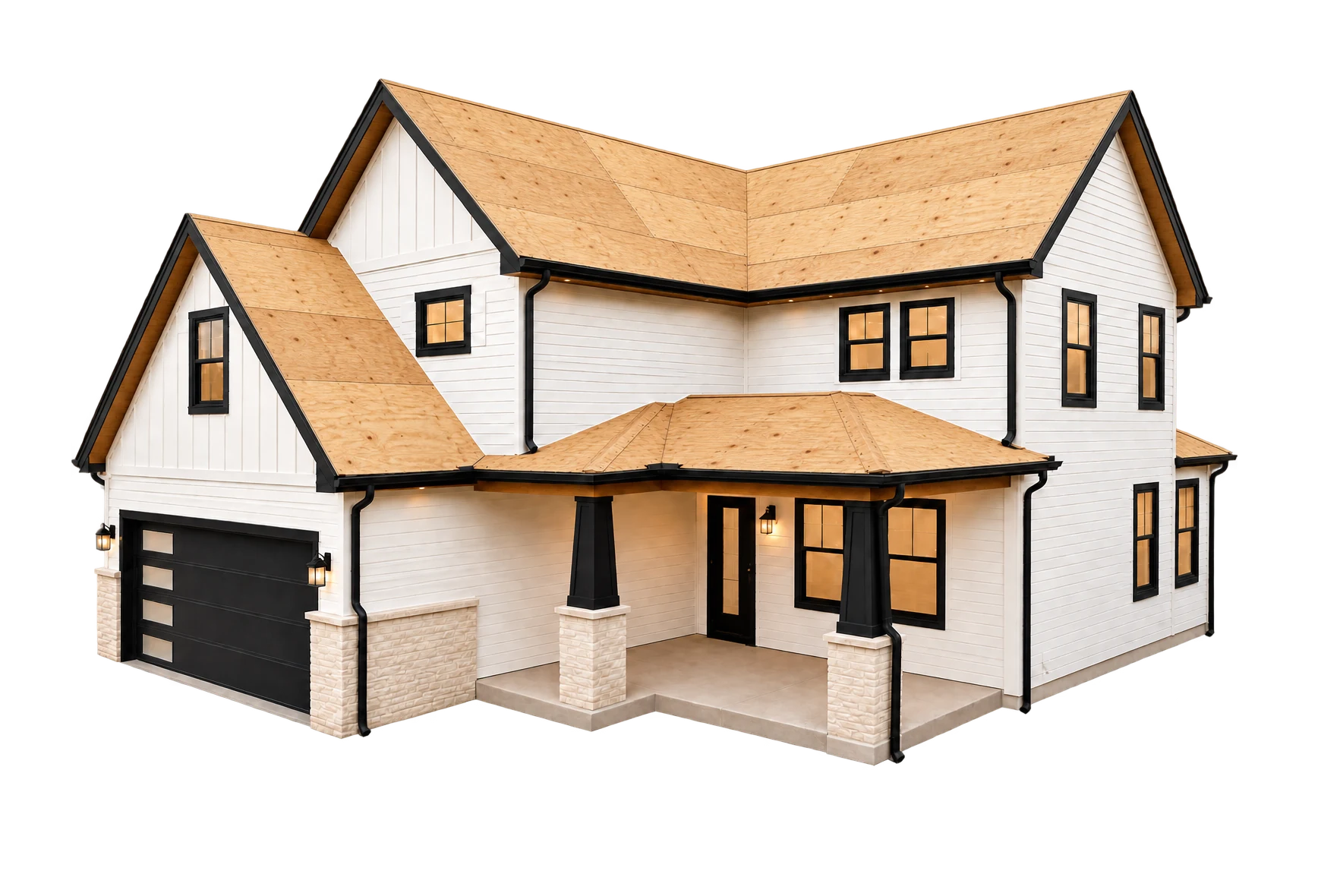
The plywood deck is the structural base of the roof system. Before anything covers it, damaged, soft or poorly secured areas have to be corrected.
Trusted products.
Proven systems.
We work with manufacturer-backed systems and components we trust, so the materials supporting your roof are as dependable as the workmanship on top of them.


FLAT ROOFING.
START WITH WATER.
A flat roof is not supposed to be perfectly flat. It needs a small, controlled slope so rainwater can travel to a drain. Once that makes sense, the rest of the system becomes much easier to understand.
THE ROOF
SHAPES THE
WATER PATH.
Think of a flat roof like a very shallow shower floor. The waterproof membrane follows the shape underneath it. If that shape has the correct fall, gravity carries water to the drain. If it has a low spot, water stays there.
The deck is the structural base.It supports everything above it.
Tapered insulation changes thickness.This is the part we can build thicker or thinner to create the gentle slope.
The membrane follows that shape.Water then moves on top of the membrane by gravity — we never “push” it.
WHAT IS
UNDER THE
BLACK ROOF?
You normally see only the top membrane. The actual roof is a built-up system underneath it. Each layer has one job: keep water out, protect the waterproofing, control heat and moisture, and carry the load into the building.
CAP SHEET — THE WEATHER SURFACEWhat it is: the tough exposed membrane you walk on and see. Job: takes UV, rain, snow and normal service traffic while keeping water out.
BASE SHEET — SECOND WATERPROOF PLYWhat it is: another membrane bonded directly below the cap sheet. Job: gives the system redundancy and a continuous waterproof layer underneath the finish.
COVER BOARD — PROTECTS THE SYSTEM BELOWWhat it is: a dense board under the membrane. Job: gives the membrane a stable surface and helps resist punctures from traffic or rooftop work.
TAPERED INSULATION — HEAT CONTROL + ROOF SHAPEWhat it is: rigid insulation installed in different thicknesses. Job: keeps heat in/out and can create the gentle fall toward the drains you saw in section 1.
VAPOR / AIR CONTROL — MANAGES MOISTURE FROM INSIDEWhat it is: a sealed layer above the deck when the assembly calls for it. Job: limits warm, moist indoor air from moving into colder roof layers and condensing.
STRUCTURAL DECK — THE ROOF'S FOUNDATIONWhat it is: steel, concrete or another structural deck. Job: carries the entire roofing assembly and transfers its load into the building structure.
FLASHINGAt walls and curbs, the waterproof membrane turns upward so water cannot run behind the roof system.
DRAINSThe roof is shaped toward these low points so rain leaves the roof instead of remaining on the membrane.
SEAMSMembrane sheets overlap and are bonded together. These connections must stay continuous and watertight.
A GOOD FLAT ROOF
IS MORE THAN
GOOD MEMBRANE.
Two roofs can use the same membrane and perform very differently. The finished surface matters, but so do the way it was installed, how the water drains, what is happening inside the assembly, and how the roof is maintained.