
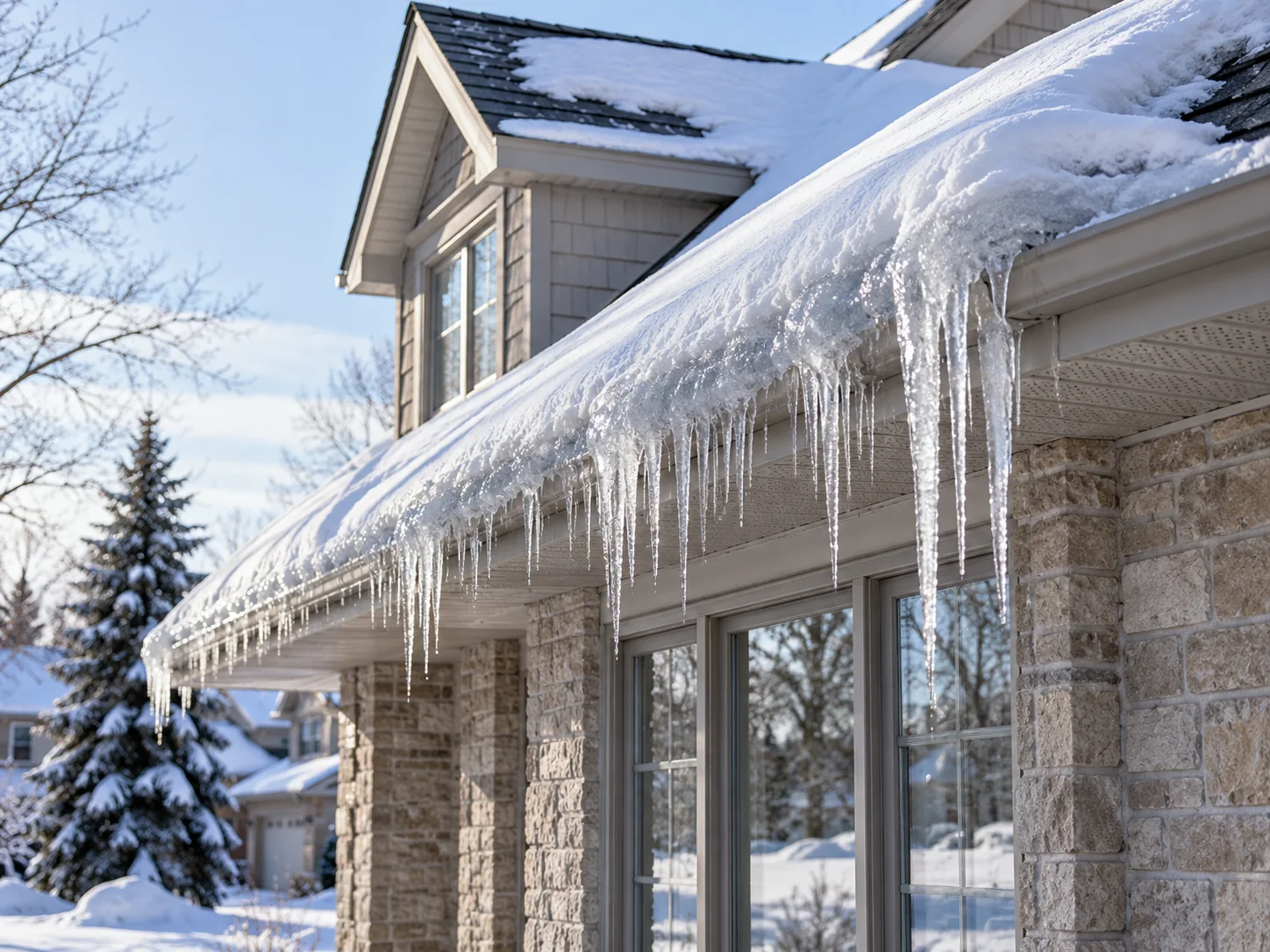
Ice at the eaves is the visible symptom. The useful diagnosis looks at heat loss, air leakage, insulation, ventilation and the roof edge as one connected system.
What an ice dam actually is
An ice dam forms when snow on the warmer upper portion of a roof melts, runs toward the colder eave and refreezes. As that cycle repeats, a ridge of ice can build along the roof edge. Water from later melting snow may then collect behind that ridge instead of draining freely off the roof.
The ice itself is easy to see. The conditions that created it are often less obvious. That is why an ice-dam problem should not be treated only as an exterior roofing problem.
Why Ontario homes are vulnerable
Ontario winters regularly move through snow, sun, thaw and refreeze conditions. Those temperature swings make roof-edge freezing possible, especially when attic heat is escaping unevenly through the ceiling plane.
Common contributors include air leaks around attic hatches, plumbing and electrical penetrations, uneven insulation coverage, blocked soffit intake, poorly connected bath fans, and roof geometry that creates cold pockets. One property can have several of these conditions at the same time.
Warning signs worth paying attention to
Large icicles are not automatically proof of an ice dam, but repeated ice buildup in the same areas deserves attention. Inside the home, warning signs can include ceiling staining, damp insulation, frost on roof sheathing, peeling finishes near exterior walls, or musty attic conditions.
Outside, look for thick ice bands at eaves, frozen gutters, meltwater appearing behind fascia, or patches of roof snow that disappear much faster than surrounding areas. Those patterns can help show where heat is reaching the underside of the roof.
The better fix starts in the attic
Removing ice may deal with an immediate hazard, but lasting prevention usually means controlling the heat and moisture reaching the roof deck. Air sealing is often the first priority because moving warm air can carry far more heat and moisture than insulation alone.
Insulation should then be continuous and correctly installed. Ventilation needs a clear intake path at the soffits and a usable exhaust path higher on the roof. Adding more vents without checking those paths can leave the underlying problem unchanged.
What homeowners should do during an active problem
Avoid climbing onto an icy roof or striking ice with tools that can damage shingles, gutters or flashing. If water is already entering the home, protect the interior and arrange for a qualified inspection. Emergency work may focus on controlling water first, followed by a proper attic and roof assessment once conditions are safe.
The most useful inspection should document both the exterior roof edge and the attic conditions above the affected area. That helps separate a one-time weather event from a building-performance issue likely to return.
The LCKD takeaway
Ice dams are a good example of why roofing, insulation, ventilation and air sealing should not be evaluated in isolation. The best repair plan identifies where the heat is coming from, how moisture is moving, and whether the roof edge can stay cold enough for meltwater to leave the roof normally.
This guide is general educational information. Every roof and building assembly is different; site conditions, manufacturer instructions and applicable requirements should be reviewed before work is specified.