
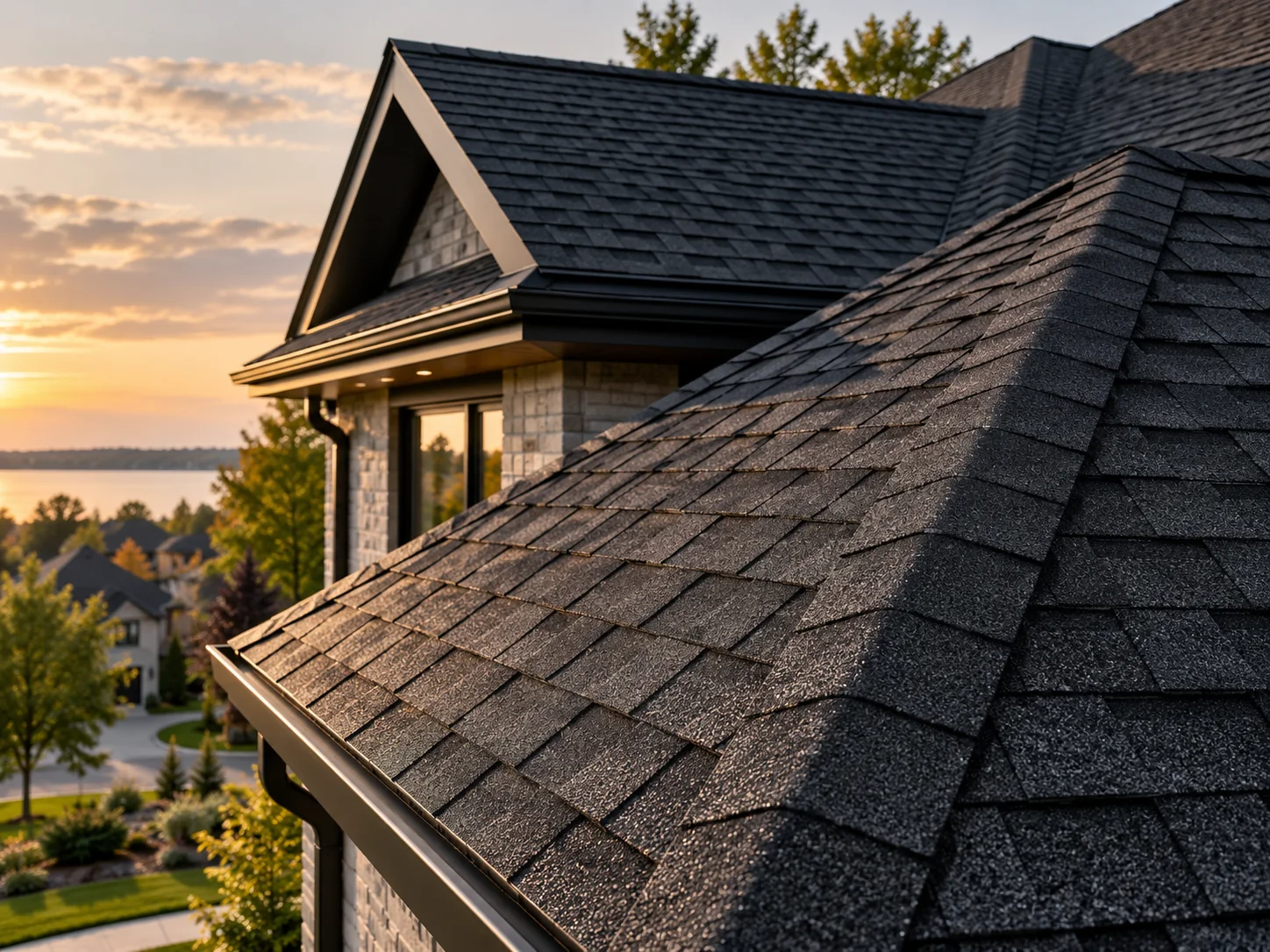
The visible shingle matters, but so do the deck, underlayment, ice-and-water protection, flashing, ventilation and installation details underneath it.
Start with the system, not the colour board
Architectural shingles are often compared by colour, profile and warranty length. Those are useful details, but they do not tell the whole story. A finished asphalt roof is a layered assembly, and the visible shingle is only one part of it.
A strong comparison should look at the roof deck, underlayment, eave and valley protection, flashing, starter course, shingle fastening, ridge treatment and attic ventilation. If one of those pieces is weak, a premium shingle cannot compensate for it.
What changes from one architectural shingle to another
Products vary in construction, weight, reinforcement, sealant design, nailing zones, wind-related requirements, granule blend and appearance. Some are built to create a deeper shadow line; others prioritize simpler installation zones or impact-related features.
That does not mean one product is automatically best for every home. Roof pitch, exposure, surrounding trees, local wind conditions, ventilation and the owner’s priorities all affect the better choice.
Installation quality still matters more than marketing
Manufacturer literature assumes the product is installed according to its instructions. Nail placement, fastener count, deck condition, starter alignment, valley method and flashing details can change how the roof performs.
This is one reason two houses with the same shingle brand can age very differently. The product is shared; the assembly and workmanship may not be.
Ontario conditions to think about
Freeze-thaw cycles, wind-driven rain, snow loading, spring storms and summer heat all put different demands on a roof. Eaves, valleys, sidewalls, chimneys and penetrations deserve particular attention because they are the places where water has more opportunities to slow down or change direction.
A good roofing specification should be written for the actual roof rather than copied from a generic package.
How to compare quotes intelligently
Ask what underlayment is included, where ice-and-water protection will be installed, how existing flashing will be handled, whether ventilation is being reviewed, what happens if damaged decking is found, and exactly which manufacturer components are being used.
A lower shingle price can be less important than a better-defined scope. The more clearly the assembly is documented before work begins, the easier it is to compare proposals on equal terms.
The LCKD takeaway
Choose shingles as part of a roof system. The right question is not simply, “Which shingle is best?” It is, “Which complete assembly makes sense for this roof, and how will it be installed?”
This guide is general educational information. Every roof and building assembly is different; site conditions, manufacturer instructions and applicable requirements should be reviewed before work is specified.