
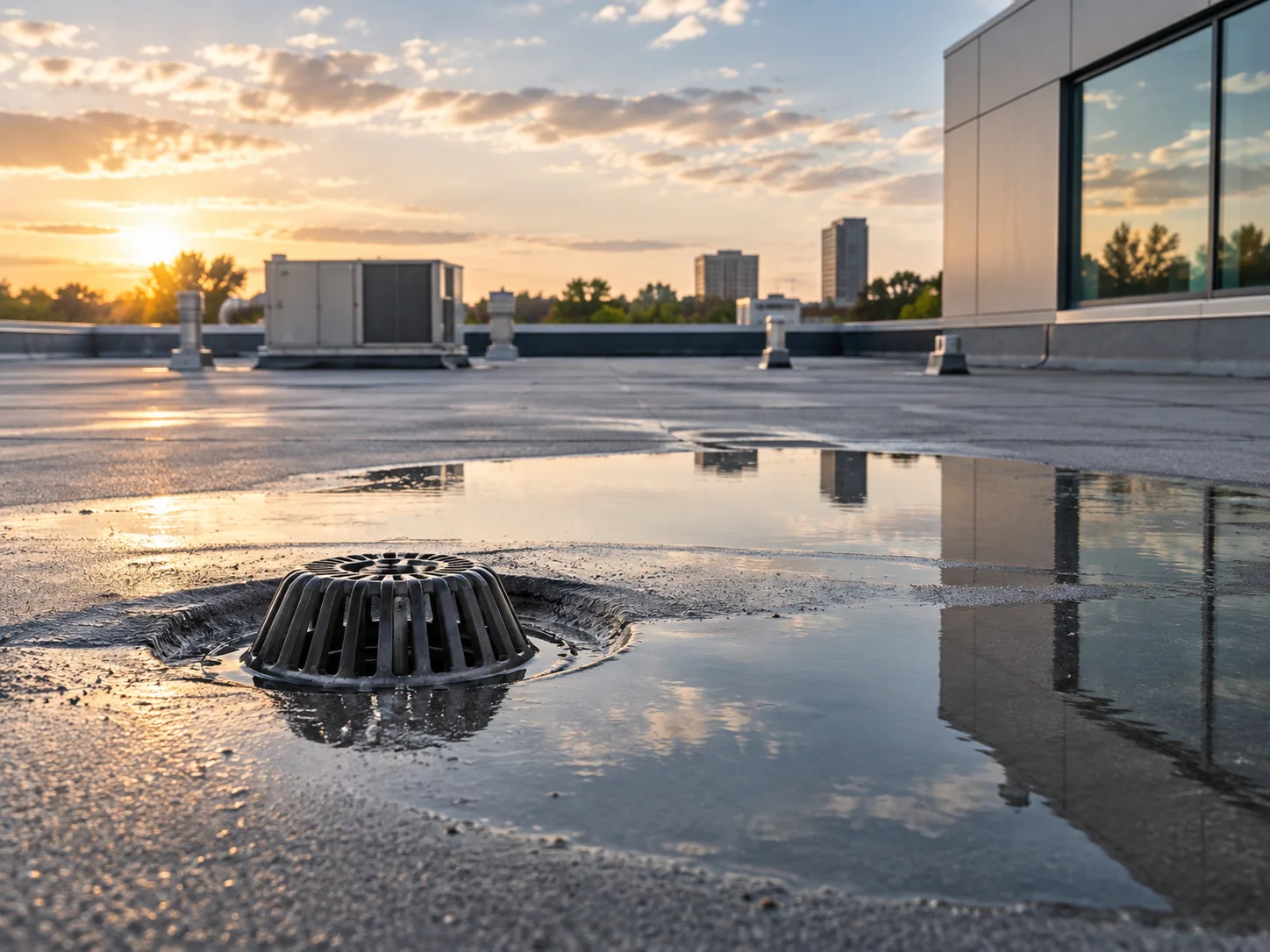
Low-slope roofing is not truly flat. Standing water can point to blocked drains, settlement, inadequate slope or maintenance issues that deserve investigation.
Low-slope roofs are designed to drain
Commercial roofs are often called flat roofs, but a functioning low-slope roof should still move water toward drains, scuppers or other designed outlets. Some temporary water after a storm can occur; persistent ponding deserves a closer look.
The important question is why water remains and whether the condition is changing over time.
Common causes of ponding
Blocked drains, debris, compressed insulation, structural deflection, settlement, poorly executed repairs and insufficient slope can all contribute. Mechanical equipment and roof traffic can also alter drainage patterns.
Because several causes can create the same visible puddle, the repair should follow the diagnosis.
Why water depth and duration matter
Standing water adds load and keeps roofing materials wet longer. It can also accelerate contamination, vegetation growth and deterioration around seams or penetrations if maintenance is neglected.
In winter, freeze-thaw cycling can make drainage deficiencies more disruptive and can conceal outlet blockages under snow and ice.
Drainage maintenance is part of roof maintenance
Drains and strainers should be checked routinely, especially around seasonal leaf fall and after major storms. Overflow paths should also remain unobstructed.
For managed properties, photo records of recurring ponding locations can help show whether the condition is stable or worsening.
When a repair needs more than membrane work
If ponding is caused by slope or structural conditions, surface patching alone may not correct it. Tapered insulation, drain modifications or structural review may be appropriate depending on the roof.
That is why commercial roof work often benefits from coordination between the roofing contractor, property team and other building professionals.
The LCKD takeaway
Treat recurring ponding as information. Find out whether the cause is maintenance, drainage design, insulation, structure or a local repair detail before choosing the fix.
This guide is general educational information. Every roof and building assembly is different; site conditions, manufacturer instructions and applicable requirements should be reviewed before work is specified.