
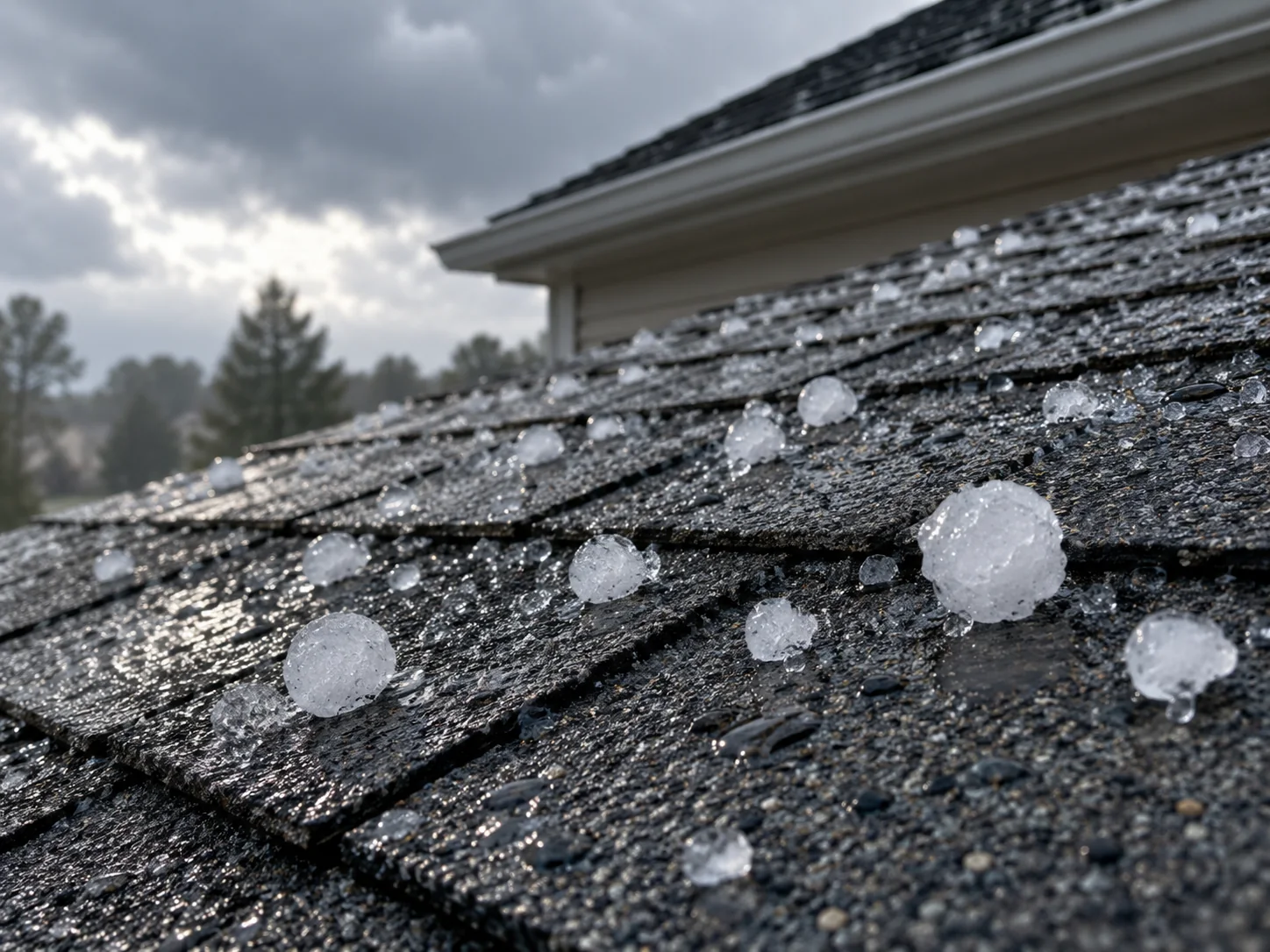
Impact ratings are useful product information, but they are not a promise that a roof is damage-proof. Here is how to interpret the label realistically.
What the rating is trying to tell you
Impact-resistant shingles are designed and tested to better tolerate certain impact conditions than standard products. A Class 4 designation is commonly used to identify products that reached the highest classification within a particular test protocol.
That makes the rating useful for comparison, but it should not be read as a guarantee against every hail event.
Real storms are not laboratory events
Hail varies in size, density, shape, wind speed and angle. Roof age, temperature, slope and the surface underneath the shingle can also affect how an impact is absorbed.
A product that performs well in testing can still be damaged by a severe storm or by conditions outside the test scenario.
The roof system still matters
Impact resistance does not replace proper underlayment, flashing, fastening, ventilation or deck condition. A stronger shingle installed on a poorly prepared roof is still part of a weak overall assembly.
Installation instructions and compatible accessory components remain important.
What to do after hail
Do not assume a roof is fine simply because it uses an impact-rated product. If the storm was significant, a documented inspection can help identify bruising, fractures, displaced materials, damaged flashing or impacts to vents and other accessories.
Avoid relying only on ground-level photos when the roof can be safely inspected by a qualified professional.
Insurance and product claims
Insurance treatment varies by carrier and policy, and product warranties have their own terms and exclusions. Homeowners should verify current requirements directly rather than assuming a rating automatically changes coverage or guarantees replacement.
The LCKD takeaway
Think of impact resistance as one product attribute, not a force field. It can be a useful upgrade when it fits the roof and budget, but the entire roof system and the severity of the actual storm still matter.
This guide is general educational information. Every roof and building assembly is different; site conditions, manufacturer instructions and applicable requirements should be reviewed before work is specified.