
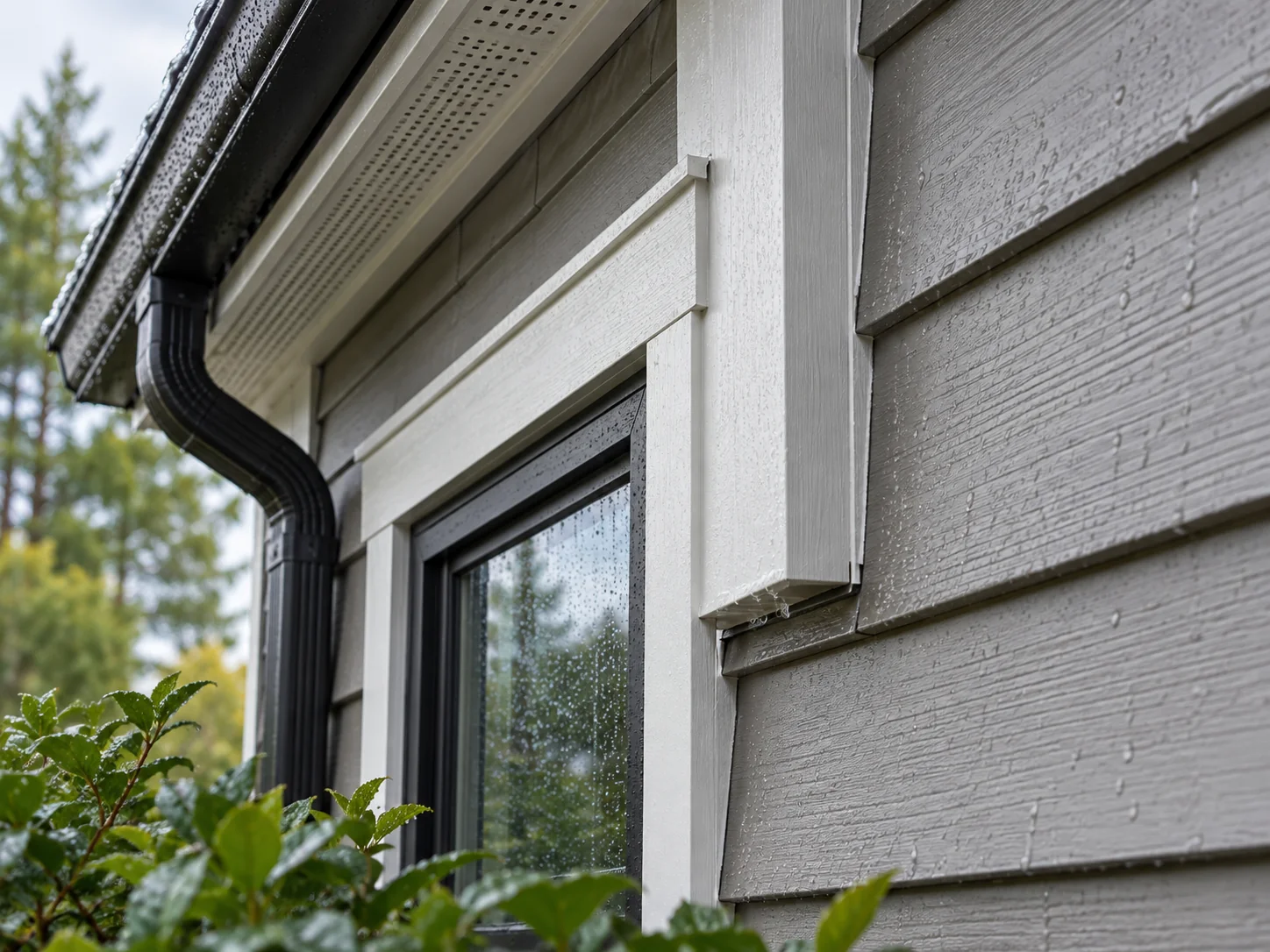
Cladding is the visible face. Openings, flashing, penetrations and the drainage plane behind it often determine whether the wall manages rain successfully.
Siding is not the only water barrier
Many siding systems are designed as the visible cladding layer, not as a perfectly waterproof skin. Wind-driven rain can reach joints and transitions, which is why the layers behind the cladding matter.
A durable wall gives incidental water a controlled path back out instead of trapping it against sheathing or framing.
Openings are where details get complicated
Windows, doors, hose bibs, electrical boxes, vents and other penetrations interrupt the wall. Each interruption needs a sensible flashing and drainage strategy.
When staining or swelling appears around an opening, replacing only the visible siding may leave the actual entry point untouched.
Roof-to-wall intersections deserve attention
Where a roof terminates beside a wall, water is concentrated into a small area. Flashing, kick-out details, eavestrough placement and the wall’s drainage layer all have to work together.
These transitions are a common place for an exterior symptom to originate from a roofing or drainage detail instead of the cladding itself.
What trapped moisture can look like
Soft trim, peeling paint, swelling, staining, recurring caulking failure and localized mould or odour can all justify a closer look. The visible damage does not always identify where the water first entered.
A good diagnosis follows the water path upward and outward before deciding what needs replacement.
Why “more caulking” is not always the answer
Sealants are useful at specific joints, but they should not block intended drainage paths. Adding sealant everywhere can sometimes trap water rather than stop it.
The correct detail depends on the cladding system and the layers behind it.
The LCKD takeaway
When siding shows moisture damage, inspect the wall as a system. Cladding, flashing, windows, roof edges, drainage and the weather-resistive layer all deserve a place in the diagnosis.
This guide is general educational information. Every roof and building assembly is different; site conditions, manufacturer instructions and applicable requirements should be reviewed before work is specified.