
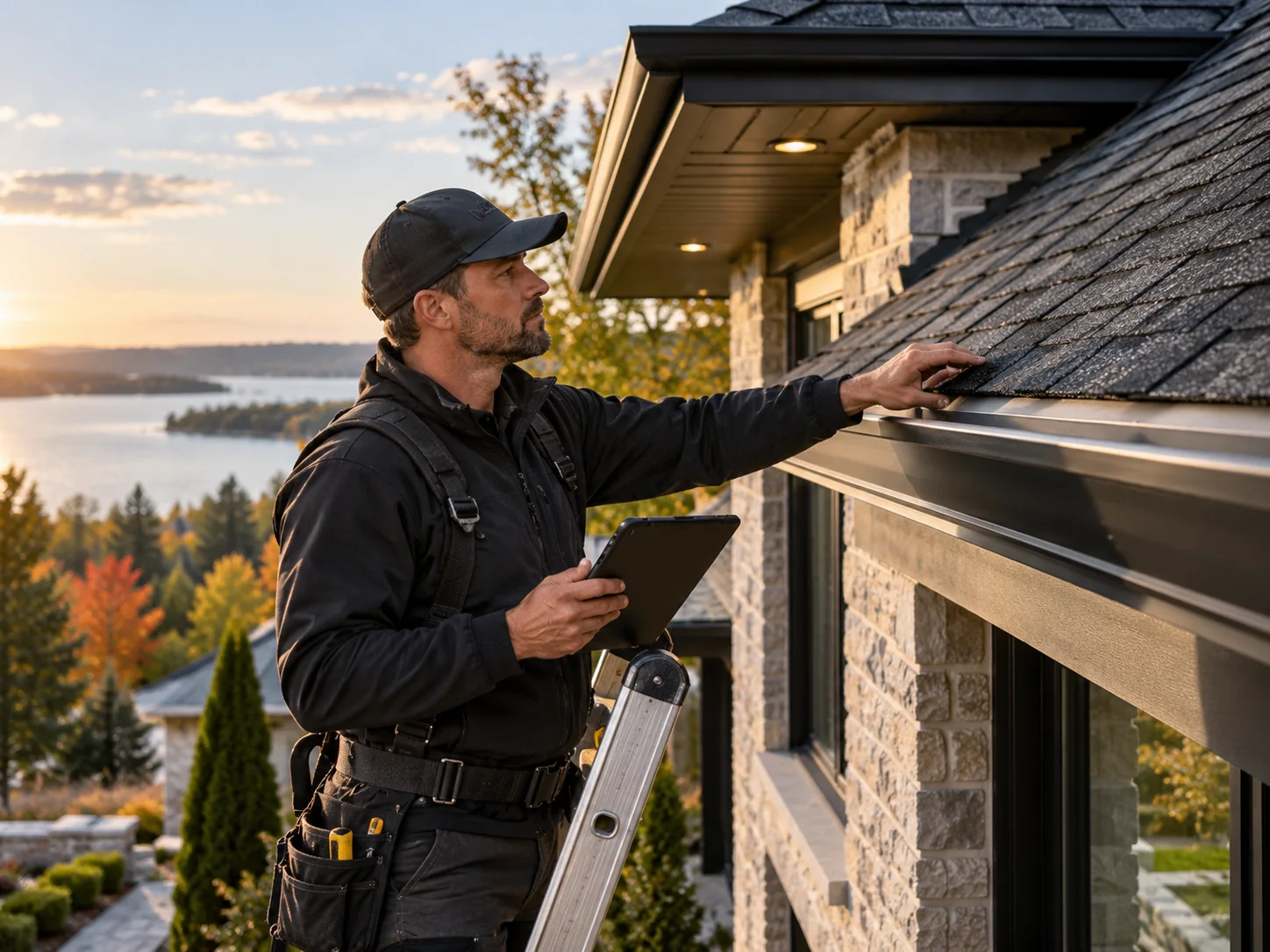
A useful inspection creates a record: overall condition, detailed photos, visible defects, exterior connections and a clear explanation of what deserves attention.
An inspection should create a record
A roof inspection should do more than produce a verbal opinion at the driveway. The homeowner, property manager or builder should come away with documentation that shows what was observed and why it matters.
That record becomes useful later when comparing repairs, planning capital work, reviewing storm damage, communicating with a board or property owner, or checking whether a condition has changed over time.
What should be photographed
Useful photo documentation normally includes broad roof views and close-ups of specific conditions. Eaves, valleys, ridges, sidewalls, chimneys, plumbing vents, skylights, low-slope transitions and other penetrations should be reviewed where accessible and safe.
The goal is context. A close-up of a cracked shingle is more useful when there is also a wider image showing where that shingle sits on the roof.
Condition is more than shingle age
An inspector should look for signs of mechanical damage, granule loss, lifted or poorly sealed tabs, exposed fasteners, flashing issues, soft or questionable decking, deteriorated sealants, drainage problems and ventilation concerns.
Age can help frame expectations, but condition and installation details often tell a more useful story than age alone.
The attic can change the diagnosis
When accessible, attic observations can help connect exterior symptoms to interior causes. Moisture staining, frost, blocked ventilation paths, disconnected exhaust ducts or uneven insulation can change what appears to be a simple roofing problem.
This is especially important when the complaint involves recurring winter ice, condensation or staining that has returned after prior roof repairs.
A clear report separates urgency from planning
Not every observation requires immediate replacement. A useful report distinguishes between active problems, maintenance items, repairs that can be planned and conditions that simply need monitoring.
That makes the inspection more useful for budgeting and reduces pressure to make a major decision based on a single photo or isolated defect.
The LCKD takeaway
A good inspection should leave you with evidence you can understand. Photos, location, condition and recommended next steps turn an opinion into something you can actually use.
This guide is general educational information. Every roof and building assembly is different; site conditions, manufacturer instructions and applicable requirements should be reviewed before work is specified.